
Transport and logistics depots: managing energy today and preparing for electric fleets
A depot looks simple, but its power load is mixed and electric vehicle charging may soon be added. Planning now costs little.
In this article
Key points
- Today's depot load is mostly workshop equipment, compressed air, yard and security lighting, and offices. Some depots add cold rooms or fuel pumps.
- Yards are lit all night, so lighting is a long-hours load and a good LED candidate, with controls to dim zones.
- Electric vehicles add a large, concentrated load, and the cost that follows depends on how many vehicles charge at the same time.
- Managed charging at bus depots halved peak demand in one model. One operator reported energy cost savings of about 40%.
- A depot that already knows its load profile, supply capacity and tariff can answer the electrification question with numbers.
Transport and logistics companies think about fuel, maintenance and driver hours. Electricity is a smaller line in the budget, and that is why it gets neglected. But a depot with a workshop, a wash bay, a large yard and an office building uses a lot of electricity. The way it uses that electricity is about to change. This article describes the load you have today and the savings it offers. It also explains how a careful operator can prepare for electric vehicles before the first one arrives.
The load today
A typical depot has four groups of electrical loads. The workshop has welding sets, lifts, tyre and wheel equipment, compressors, and pits or ramps with extraction fans. The yard has lighting, gates and security systems that run all night. The offices have lighting, computers and air conditioning. Some depots add refrigeration for cold-chain work, fuel pumps, and a vehicle wash with pumps and heaters. Your maximum demand is the highest average power you draw over a short interval in the month. One short peak can set this charge for the whole month. It is set by the times when several of these loads run together. In many depots that is early morning, when vehicles are prepared for departure and the workshop, wash bay and offices all start up.
An audit that logs the main incomer for two weeks shows the daily and weekly pattern. It shows the base load that runs overnight, and the peaks. The base load is important in depots, because yard lighting and security systems run all night. It is usually larger than managers expect.
Lighting, compressed air and the workshop
Yard and area lighting is a large and steady load. It responds well to LED fittings (light-emitting diodes, lamps that give the same light as older bulbs for a fraction of the power) with controls. A good control scheme dims or switches zones according to activity, using time schedules and presence sensors. A quiet part of the yard then stays dim and brightens when a vehicle or person comes near. The same idea works in the workshop and the offices. Compressed air in the workshop, as in a factory, is expensive, and leaks and excess pressure add to the cost. The measures are the same as those in our article on motors, air and drives. If your depot has a large roof, solar can cover the daytime load of the workshop and the offices. The method in our guide to solar feasibility applies.
Reliability: the depot that cannot stop
A depot that cannot send out vehicles loses revenue every hour. A power cut stops the workshop, the wash, the fuel pumps, the electronic gates and the security systems. It can also leave vehicles locked in or locked out. For many operators, two things give enough protection. One is a generator with automatic changeover, sized for the essential loads. The other is a small UPS for the dispatch and communications systems. If your depot already runs on a generator for much of the day, the cost of diesel needs the same analysis as in our article on diesel cost.
The arrival of electric vehicles
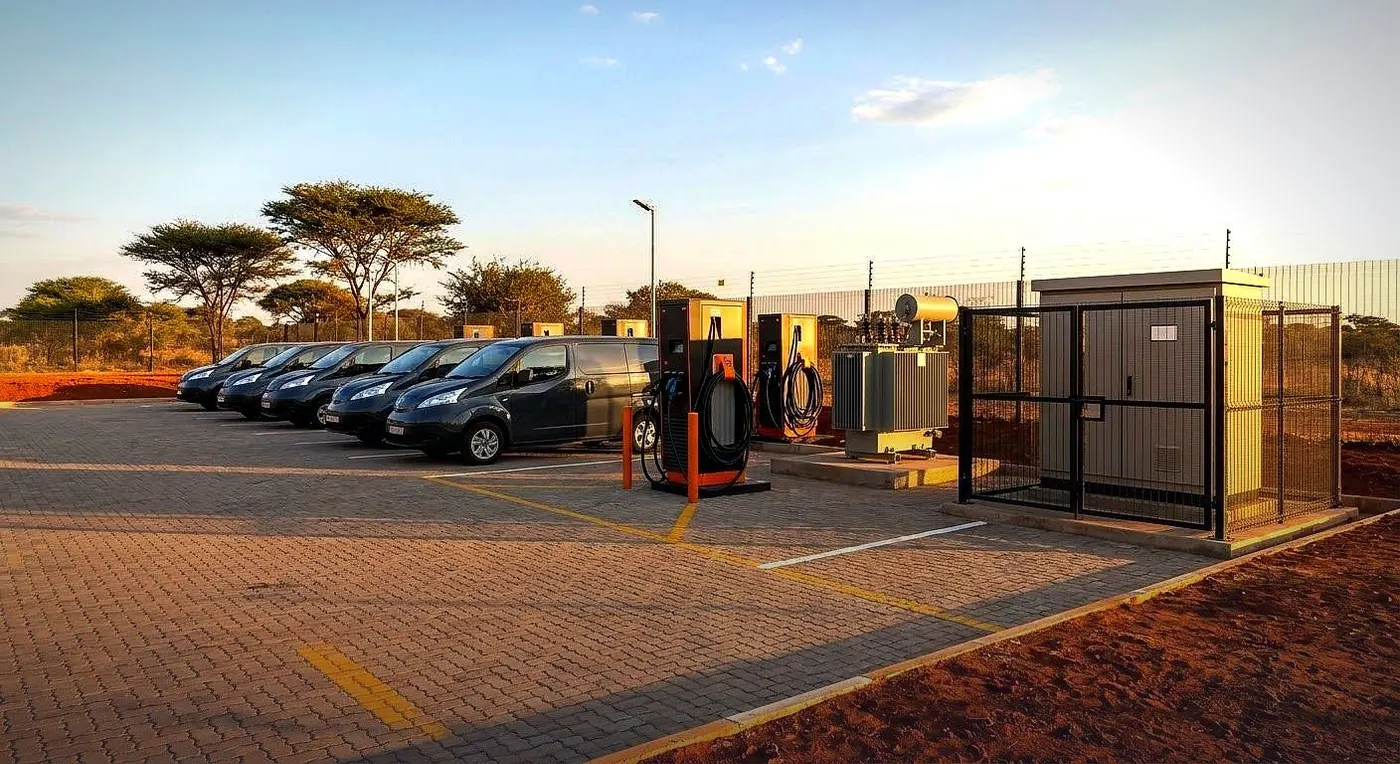
Electric buses, delivery vans and trucks are starting to appear on African roads. A depot that expects to host them must understand how they will affect the electrical system. The difference from an ordinary load is size and concentration. One heavy vehicle may charge at tens or hundreds of kilowatts. If a fleet of such vehicles all plug in when they return in the evening, the result is a very large peak. The electricity bill follows the peak. A maximum-demand charge is worked out from the highest demand in a short interval, often a quarter of an hour, in the billing month. A single evening when all the vehicles charge at once can set the charge for the whole month.
The answer is managed charging. This controls when and how fast each vehicle charges. The total stays within a chosen limit, and every vehicle is still ready for its next trip. Studies and operator reports show how big the effect can be. An Australian engineering analysis modelled a bus depot. With unmanaged charging the peak was 3.5 to 5 MW (a megawatt is 1,000 kilowatts). With managed charging it was 1.8 to 2.5 MW. That difference was big enough to decide whether the depot needed its own high-voltage substation. A California transit agency reported that managed charging software found energy cost savings of about 40% a year. It still made sure that vehicles were charged and ready. These figures come from different systems and markets, so do not apply them directly to Zimbabwe. But the principle holds everywhere. In a depot, the cost of electric vehicles depends as much on how you control the load as on the vehicles themselves.
Bars show the midpoint of each modelled range. Australian engineering analysis; local results depend on the fleet and the tariff. Source: EVSE Australia
How to prepare without overspending
A depot that is thinking about electrification does not need to build charging capacity today. It needs three pieces of information and one decision. The first piece is your present load profile and maximum demand. The second is the capacity of your supply and your transformer. The third is your tariff, per kVA and its fixed charges, including the maximum-demand charge. The decision is whether to reserve space and routes for future cables and switchgear when you do current work. Switchgear means the switches, fuses and circuit breakers that control and protect the supply. A load study adds the expected charging profile to your present load. It shows whether your existing supply is enough, whether you need a transformer upgrade, and what the effect on your bill would be. You can test solar and storage as ways to cut the peak and the cost of charging. But do this only on the numbers from the study.
How AVEX GRID helps
- Depot energy audit. An energy audit is a survey of where a site uses energy and where it can save. We log the load, find the night-time base load and rank the savings in lighting, air and the workshop.
- Supply and backup design. We size the generator, changeover and UPS for the loads that must keep running.
- Electrification readiness study. We model charging against your supply and tariff and show the cost of different charging strategies.
What AVEX GRID can take off your hands
AVEX GRID is an engineer-led energy consultancy in Zimbabwe. We do the technical work that turns an energy investment into a plant that is licensed, connected, financed and performing, whether you are a local operator or an investor overseas.
We quote fixed prices after a free scoping call and reply the same working day.
Frequently asked questions
What is the quickest saving in a depot?
LED yard lighting with controls, and switching off or reducing the night-time base load. Both cost little and are visible on the next bill.
Do we need to upgrade the supply for electric vehicles?
It depends on the number of vehicles, their charging power and how the charging is managed. A load study answers the question before any money is spent.
What is managed charging?
Control of the timing and speed of charging so that the total demand stays within a limit while every vehicle is still ready for its next trip.
Can solar help a depot?
Yes, for the daytime loads of the workshop and the offices, and possibly for charging, depending on when the vehicles are available. The design needs the load profile.
Sources and notes
General information to help you plan. The rules that apply to your site are confirmed by AVEX GRID against the current gazetted text, ZERA and ZETDC as part of the work. The sources used are listed below.