
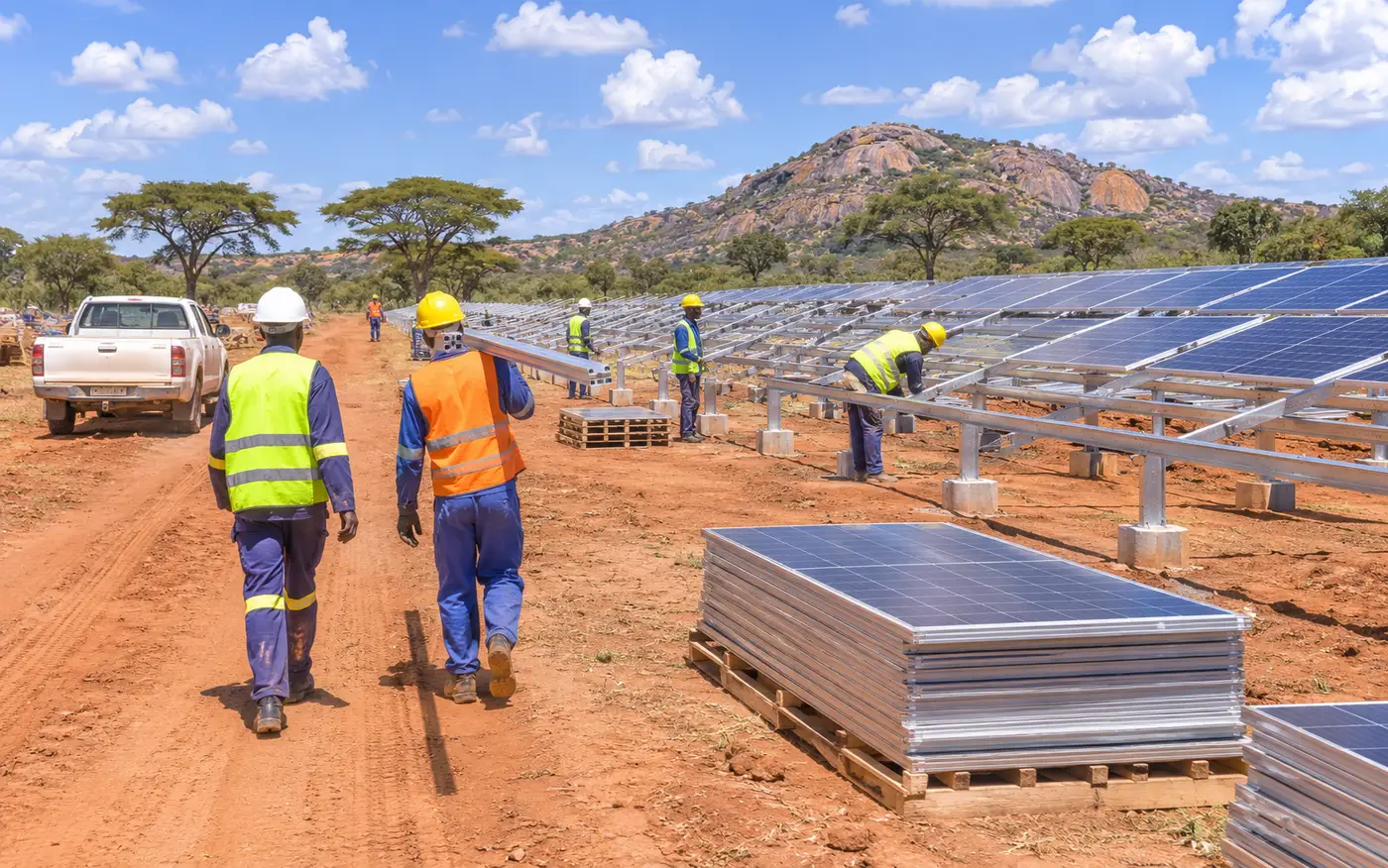
Environmental approvals for a solar plant in Zimbabwe: what the process involves
Solar is a gentle way to make power, but a plant still uses land and changes the site. The environmental approval looks at this before the first panel goes up.
In this article
Key points
- Environmental assessments are governed by the Environmental Management Act and SI 7 of 2007, run by the Environmental Management Agency (EMA).
- Projects on the First Schedule list must be assessed before they start. EMA decides if your solar project needs a full assessment.
- A ZERA generation licence application asks for an EIA certificate from EMA, so a licensed generator needs the environmental approval.
- The assessment studies the site, the design and the neighbours, and proposes ways to avoid, reduce and manage any harm.
- Start the environmental work early, alongside site selection and grid studies. It avoids a delay late in the schedule.
Solar developers in Zimbabwe soon learn that the technical design is only one of the documents a project needs. Four approvals run side by side, and each depends on the others. They are the generation licence, the connection agreement, the land rights and the environmental approval. A licence is official permission from the Zimbabwe Energy Regulatory Authority (ZERA). A connection agreement is the contract with the utility that sets the terms for joining the grid. The environmental approval is often the least understood. It is also the one most likely to cause delay when you start it late. This article explains what the process needs and how to manage it.
The legal framework
The Environmental Management Act is the main law for protecting the environment in Zimbabwe. It sets up the Environmental Management Agency (EMA), which approves projects that could affect the environment. It also requires an assessment of any project likely to have significant effects. The detailed procedure is in the Environmental Impact Assessment and Ecosystems Protection Regulations of 2007, Statutory Instrument 7 of 2007.
The regulations include a schedule of prescribed projects. Any project on that schedule must complete an environmental impact assessment and get an approval before it starts. The power generation and transmission category is generally described as covering thermal power stations, hydropower schemes and high-voltage transmission lines. So you should confirm with the Agency, at the start, how it classes a solar plant of your size. Guidance from the Agency and from practitioners is that the project's scale and setting decide the classification and how big the assessment must be. A project in or near a wetland or protected area will be treated differently from one on degraded farmland.
What matters in practice is the link to energy licensing. The ZERA application form for a generation licence asks for an environmental impact assessment certificate issued by EMA. A generation licence is official permission to generate electricity for sale. So if you plan to hold one, plan for the environmental approval from the start. Do this even when the legal classification of your project is not clear.
The steps of the process
The process follows a sequence common to environmental assessment systems. First, the developer or its consultant registers the project with the Agency. They submit a prospectus, or project description, that sets out the location, the size, the technology and the main activities. The Agency reviews it. It then decides whether a full assessment is needed and what the assessment must cover. This screening step is commonly said to take about twenty working days. Treat that as a rough guide and confirm it with the Agency.
If a full assessment is required, the consultant prepares the terms of reference. The consultant then carries out the specialist studies and the public consultation. Finally, the consultant writes the environmental impact assessment report with an environmental management plan.
The Agency reviews the report. This includes a period when the public may comment. It then decides whether to issue the certificate, with or without conditions. The conditions are binding. They may include monitoring, rehabilitation and reporting duties during construction and operation.
What the assessment studies
An assessment of a solar plant normally covers a set list of topics. First, it describes the site and how the land is used. That includes the vegetation, the soils and slope, the drainage and any watercourses, and any protected or sensitive species.
Second, it looks at the effects of construction. These are clearing, earthworks, dust, noise, traffic, the workforce and its accommodation, waste, and the handling of fuels and concrete. Third, it looks at the effects during operation. These include glint and glare, changes to rainwater runoff, the visual impact, and how you manage vegetation beneath the panels. At the end of the plant's life, it also covers decommissioning and the recycling or disposal of panels and batteries. The assessment also covers the route of the grid connection. It looks at the effect on landowners, on birds and on cultural heritage sites.
Social issues are central. Land taken for a plant may be used for grazing or cropping. So the consultation must reach the people who use it and those who live nearby. The report describes employment, local buying and the benefits to the community. It also describes how complaints will be handled. Water use is considered too. Solar panels need occasional cleaning, and a plant may need water for construction. Even so, a photovoltaic plant, which uses panels that turn sunlight into electricity, uses far less water than a thermal power station.
Managing the process so it does not delay the project
Several practices keep the environmental work from holding up the whole project.
- Think about the environment when you choose the site. A site that is already disturbed is quicker to assess and cheaper to build on. It helps if the site is close to an existing substation or line and away from water bodies and sensitive areas. A substation is a site where the voltage of electricity is changed and lines are switched and protected. A site in a high-value ecosystem is harder.
- Start the registration with the Agency early. Do it when you prepare the licence application, not after the design is complete.
- Share design information with the environmental consultant early. Then the report describes the project that will actually be built.
- Plan the consultation properly. Use notices, meetings and written records. Defects in consultation are among the commonest reasons for a report to be sent back.
The environmental management plan deserves attention because it is the part of the report that keeps applying. It gives out responsibilities, sets monitoring and reporting, and lists the measures the contractor must follow. A clear plan is written to be used by site managers and not only by regulators. That makes compliance routine.
Own-consumption plants and smaller projects
Not every solar installation goes through the full process. A rooftop system on an existing building has a very small environmental footprint. Its main approvals are electrical and regulatory. These are registration with ZERA, and a connection agreement with the utility if the system connects to the grid.
Larger ground-mounted systems for your own use need the environmental certificate. So do plants that will hold a generation licence. If you are unsure, ask the Agency in writing, because the answer decides your programme. Our guides to own-consumption solar and developing a solar IPP explain the licensing that runs alongside.
Lenders and the environmental file
Lenders review the environmental file as part of their due diligence. This is a careful check of a project before money is committed, to find the risks. Development finance institutions also apply their own standards. One example is the International Finance Corporation's Performance Standards. These go beyond the national requirement in areas such as biodiversity, labour and community health.
A project with an approved assessment, a management plan and a record of consultation is easier to finance. A project with none of these is delayed at the financing stage, when delay is most expensive. The same happens if the certificate has conditions that the design does not meet.
How AVEX GRID helps
- Screening and programme. We advise whether a project is likely to need a full assessment and build the approvals into the project schedule.
- Technical inputs. We supply the design, layout, grid route and construction information that the environmental consultant needs.
- Coordination with licensing and finance. We align the environmental file with the ZERA licence application and with lender due diligence.
What AVEX GRID can take off your hands
AVEX GRID is an engineer-led energy consultancy in Zimbabwe. We do the technical work that turns an energy investment into a plant that is licensed, connected, financed and performing, whether you are a local operator or an investor overseas.
We quote fixed prices after a free scoping call and reply the same working day.
Frequently asked questions
Does every solar plant need an EIA?
Not necessarily. Rooftop systems normally do not. Ground-mounted and licensed generation plants are more likely to need one, and EMA decides on the classification, so ask in writing.
Is the environmental certificate needed for a ZERA licence?
The ZERA generation licence application form asks for an EIA certificate issued by EMA, so a licensed generator should plan to obtain one.
How long does the process take?
It depends on the classification and the quality of the submission. Screening may take a few weeks, and a full assessment with public consultation takes longer. Start early.
What is an environmental management plan?
The part of the report that sets out the measures, responsibilities and monitoring that apply during construction and operation, and it continues to bind the developer.
Sources and notes
General information to help you plan. The rules that apply to your site are confirmed by AVEX GRID against the current gazetted text, ZERA and ZETDC as part of the work. The sources used are listed below.
- The Herald: EIA, your questions answered (EMA guidance)
- ECOLEX: Environmental Impact Assessment and Ecosystems Protection Regulations, 2007
- ZERA: generation licence application form (revised July 2026)
- The Herald: what does the law say about EIA?
- IFC Performance Standards on environmental and social sustainability